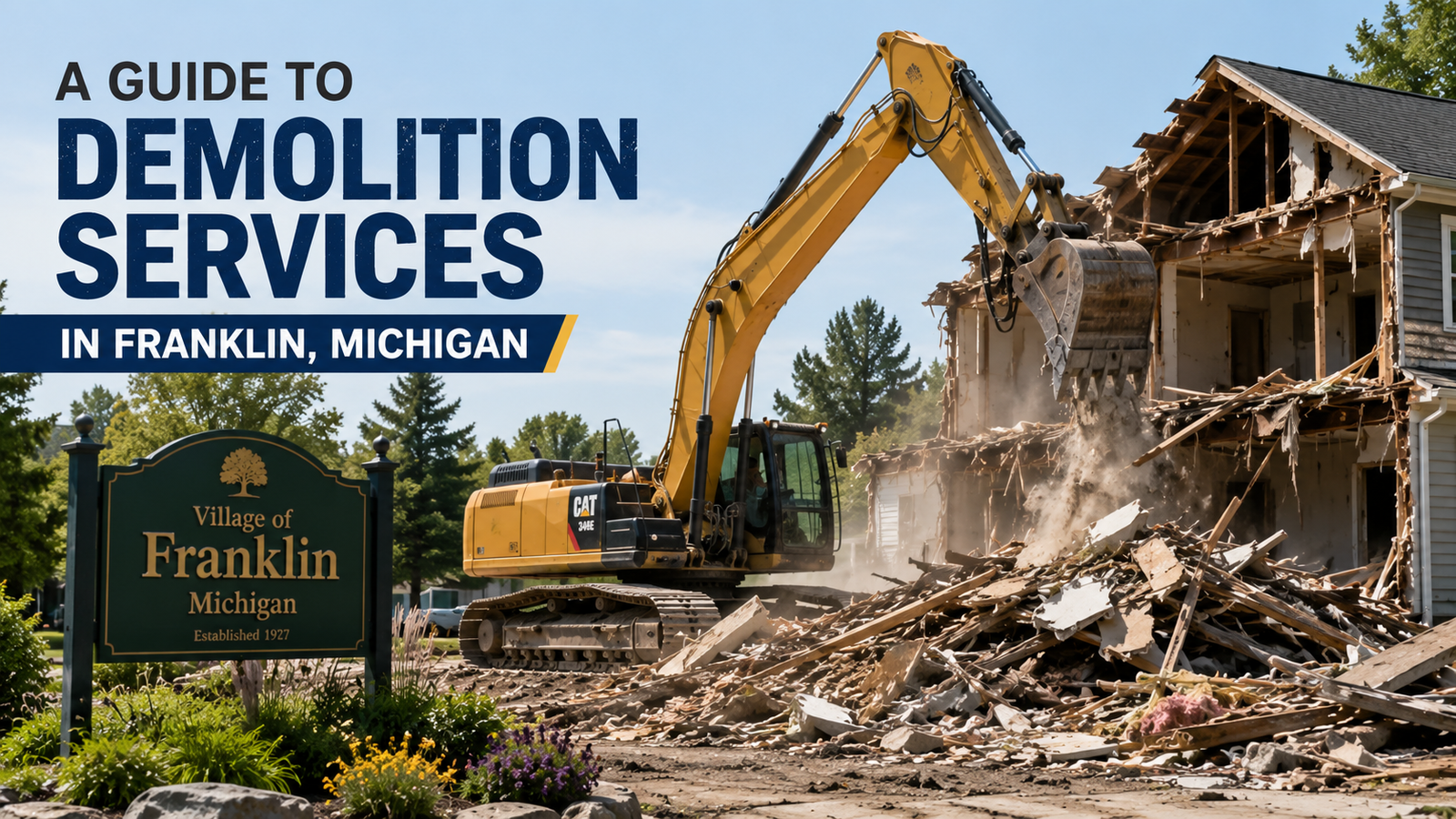
Franklin is one of Michigan’s oldest and most historic villages, known for its wooded lots, winding roads, and a strong community emphasis on preserving the area’s rural character. Because many homes in Franklin sit on larger, heavily landscaped parcels, and because some structures carry historical significance, Demolition Contractor Franklin projects here often require more careful planning than in denser suburban communities. This guide outlines what property owners should know about the demolition process in Franklin.
The Character of Demolition Projects in Franklin
Given the village’s history, demolition projects in Franklin can range from removing a deteriorated outbuilding on a large estate lot to a full residential teardown ahead of new custom construction. Because some homes and structures in the area have historical value, property owners occasionally need to coordinate with local historical preservation guidelines before demolition can proceed, particularly for structures within recognized historic areas of the village.
Site Assessment on Larger, Wooded Lots
A thorough site assessment is especially important in Franklin, where properties often include mature woodlands, natural water features, and long private driveways. Contractors typically evaluate equipment access routes, identify trees and natural features that need protective barriers, and account for the greater distance many structures sit from the road compared to more urban demolition sites.
Because some Franklin lots border wetland or floodplain areas, the site assessment sometimes also includes a review of applicable county or state environmental regulations before demolition and grading plans are finalized.
Permitting and Historical Considerations
As with any demolition project, a permit is required before structural work begins. In Franklin, property owners should also check whether their structure falls within any locally recognized historic district or has any historical designation, since this can affect the permitting process and may require additional review before demolition is approved.
Utility Disconnection and Hazardous Material Review
Before any physical demolition takes place, utilities including gas, electric, and water must be disconnected and capped by the appropriate service providers. Many homes in Franklin also date back several decades or more, making a hazardous materials survey an important step to identify substances like asbestos before mechanical demolition begins. Properties with private wells or septic systems, which are common in this less densely developed community, may require additional coordination with the county health department.
Demolition Methods Suited to the Property
The demolition method chosen often depends on the goals of the project. A full teardown of an aging structure typically uses mechanical equipment for efficiency, while projects involving the preservation of certain architectural elements, fixtures, or materials may call for a more selective deconstruction approach. This is particularly relevant in Franklin, where some homeowners choose to salvage historic materials such as original woodwork or stone before the rest of the structure is removed.
Protecting the Natural Landscape
Because Franklin’s wooded character is central to its identity, protecting trees, root systems, and natural drainage patterns during demolition is a significant consideration. Contractors commonly install protective barriers around trees that are being preserved and plan equipment routes carefully to avoid unnecessary disruption to the surrounding landscape.
For properties near the village’s ponds, streams, or wetland areas, additional care is often taken to prevent sediment runoff or debris from reaching these natural features during the demolition process, since Franklin’s waterways are closely tied to the community’s overall character and are generally subject to protective regulations at the county or state level.
Debris Sorting and Site Restoration
As demolition debris is removed, it is typically sorted into categories such as wood, metal, and concrete to support recycling. Once the structure and debris have been cleared, the site is graded to ensure proper drainage, which is especially important on wooded lots where natural water flow patterns can be more complex than on a typical suburban lot.
Some Franklin property owners also request that topsoil be preserved and reused during regrading rather than trucked off-site, since maintaining the existing soil quality can make a meaningful difference for future landscaping on a heavily wooded lot.
Timeline Considerations
Demolition timelines in Franklin can be influenced by the size of the property, the presence of hazardous materials, historical review requirements, and Michigan’s seasonal weather, which can affect access to more remote or heavily wooded lots during the winter months.
Signs a Historic Structure May Be Beyond Repair
Even in a community that places a high value on preserving its historic character, some structures reach a point where repair is no longer practical. Indicators that a building may be beyond saving include significant foundation failure, framing that has been compromised by long-term moisture exposure or pest damage, and roof or chimney structures that have deteriorated to the point of instability. For structures with genuine historical significance, it is worth consulting with local preservation resources before finalizing a demolition decision, since some elements of a building may still be worth documenting or salvaging even if the structure as a whole cannot be saved.
Mechanical Demolition vs. Selective Deconstruction on Historic Lots
The method used for a demolition project in Franklin often depends on what, if anything, is being preserved. A straightforward teardown of a deteriorated outbuilding typically uses mechanical equipment for efficiency. When a structure includes architectural elements the homeowner wants to keep, such as original stonework, timber framing, or custom millwork, a more selective deconstruction approach is often used, at least for the portions of the building where salvage is a priority, before mechanical equipment addresses the remainder.
Working Around Seasonal Access Challenges
Franklin’s rural, wooded character means some properties can be more difficult to access during Michigan’s winter months, particularly on unpaved or gravel driveways that become soft during spring thaw or icy during the coldest stretches of winter. Many property owners in the village choose to schedule larger demolition projects during late spring through fall, when ground conditions are more predictable and equipment access is generally easier to plan around.
Balancing Preservation and Progress
Franklin residents often place a high value on the village’s rural, historic feel, which means demolition decisions here are sometimes weighed a bit more carefully than in a typical suburban community. Even when a full teardown is the right decision for a given property, many homeowners choose to salvage architectural details, stone features, or mature landscaping elements as a way of preserving some connection to the site’s history, even as the structure itself is replaced.
What Happens on Demolition Day
Once permitting, utility disconnection, and any hazardous material abatement are complete, demolition day itself typically moves quickly. Crews confirm the site perimeter is secured, protective barriers around trees and landscaping are in place, and equipment is staged for the planned sequence of the teardown. For a single structure on a typical Franklin lot, the main structural demolition is often completed within a day or two, with additional time afterward for debris sorting, hauling, and final grading of the site.
After the Structure Comes Down
Following the visible teardown, remaining work includes foundation removal if applicable, backfilling with appropriate fill material, and a final check to confirm all utility connections have been properly capped below grade. Because many Franklin properties include natural drainage features such as ponds, streams, or low-lying wooded areas, final grading is often planned with extra attention to how water will flow across the site once the structure is gone, helping avoid unintended drainage issues for the property or its neighbors.
Frequently Asked Questions
Does Franklin have restrictions on demolishing historic structures? Some structures within recognized historic areas may require additional review before a demolition permit is issued, so it is worth checking with local authorities early in the planning process.
How are trees protected during demolition on wooded lots? Contractors typically use protective fencing around root zones and carefully plan equipment routes to minimize damage to the surrounding landscape.
What happens with private wells and septic systems during demolition? These systems generally require coordination with the local health department to ensure they are properly addressed as part of the project.
Can materials from an older home be salvaged before demolition? Yes, salvage and selective deconstruction are common when homeowners want to preserve architectural details or materials with historical value.
How long does a demolition project take on a large wooded lot? Timelines vary depending on lot accessibility and structure size, but the added planning for tree protection and utility access can extend the schedule compared to a standard suburban lot.
Is a survey needed before demolition on a large parcel? A current property survey is often useful, particularly for larger or irregularly shaped lots, to confirm boundaries and the location of any easements before equipment access is planned.
Do private roads in Franklin require special coordination for demolition equipment? In some cases, yes, since a number of properties in the village are accessed via shared private roads, which may require coordination with neighboring property owners regarding equipment access and timing.
Property owners in this historic community can research a demolition contractor serving Franklin to better understand how teardown and renovation projects are typically handled on the village’s wooded, larger lots.